

Who Pays PIP After a Pennsylvania Car Accident?
Who Pays Your Medical Bills After a Pennsylvania Car Accident? A Guide to PIP Benefits
Understanding first-party medical benefits under 75 Pa.C.S. §§ 1711–1714
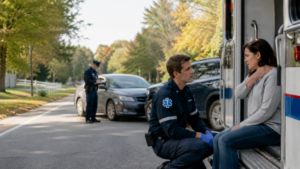
When someone who has just been in a car accident calls me, one of the first questions is often: Who pays the medical bills? The answer surprises many people. In most cases, you do not initially send accident-related medical expenses to the at-fault driver’s insurance company. This is because Pennsylvania generally uses a no-fault first-party medical-benefits system—often called personal injury protection, or PIP—under which an injured person looks first to their own auto insurance policy, regardless of who caused the collision.
When determining which insurance company will pay your medical bills, the details matter, especially when the injured person was driving someone else’s vehicle, riding as a passenger, walking, bicycling, or living with a family member who has auto insurance. Pennsylvania law establishes an order of priority that determines which insurance company must pay first-party benefits. That priority is found in 75 Pa.C.S. § 1713, titled “Source of benefits.”
This guide explains which insurer ordinarily pays Pennsylvania PIP medical benefits. Policy language, household relationships, vehicle ownership, and coverage status can change the result.
What Are PIP Medical Benefits in Pennsylvania?
Pennsylvania auto policies must include at least $5,000 in medical-benefit coverage for injuries arising from the maintenance or use of a motor vehicle. Drivers may purchase higher limits if they so choose. The Pennsylvania Insurance Department describes medical-benefits coverage as coverage that pays medical bills for the policyholder and others covered by the policy. This usually applies to relatives who live in your household.
PIP is commonly used as shorthand for Pennsylvania first-party benefits. Depending on the coverage purchased, first-party benefits may include medical treatment, income-loss benefits, funeral benefits, and accidental-death benefits. This article focuses on medical benefits.
Under 75 Pa.C.S. § 1712, available medical benefits cover reasonable and necessary medical treatment and rehabilitation for injuries sustained in the accident, subject to statutory limitations. Covered services may include hospital care, surgery, ambulance transportation, chiropractic treatment, physical therapy, medication, pain management and even some medical supplies.
Most importantly, PIP medical benefits are generally paid without deciding fault first. If another driver ran a red light in Philadelphia, rear-ended you on Route 611 in Bucks County, or caused a crash on Routes 22, 33, 80, or 81 in the Lehigh Valley or Poconos, the first-party carrier ordinarily processes covered medical bills while the liability claim is investigated separately.
Which Insurance Company Pays PIP Benefits Under 75 Pa.C.S. § 1713?
Section 1713 sets out four levels of priority. You move down the list only if a higher-priority source does not apply.
1. The Policy on Which the Injured Person Is a Named Insured
If you are specifically identified as a named insured on an auto policy, that policy is ordinarily the first source of PIP benefits—even if you were injured while occupying someone else’s vehicle. For example, if a Bucks County resident owns an insured car but is hurt as a passenger in a friend’s vehicle in Philadelphia, the resident generally seeks first-party benefits from the policy on which the resident is the named insured. So, the policy follows the named insured. The reason for this makes some sense: The legislators did not want the Bucks County resident to be reliant on the Philadelphia resident’s insurance policy. Rather, if the Bucks County resident wanted to pay a little more, for higher coverage, he could.
2. A Policy Under Which the Injured Person Qualifies as an Insured
If the injured person is not a named insured, the next question is whether that person qualifies as an insured under another policy. This frequently involves a spouse, child, or other resident relative covered through a household auto policy. Household composition and the policy’s terms can therefore be critical.
For example, a college-age child who lives with parents in Northampton County and is injured in a friend’s car may be covered as an insured under a parent’s policy. The correct answer depends on the facts, including residence and policy definitions; it should not be assumed based only on whose car was involved.
3. The Policy Covering the Vehicle Occupied by the Injured Person
If the injured occupant is neither a named insured nor an insured under another applicable policy, the next source is the policy covering the vehicle the person occupied. This rule often applies to a passenger who does not own a vehicle and is not covered by a household member’s policy. In such a case, the injured person would complete an Affidavit of No Insurance, which should be Notarized.
Suppose a Monroe County visitor who has no auto insurance and no applicable household coverage is injured while riding in an insured vehicle near Stroudsburg. The policy on that vehicle will ordinarily be the source of first-party benefits, regardless of who is at fault for the accident. The same basic rule may apply when an uninsured person borrows an insured vehicle, subject to eligibility issues, exclusions, and the particular policy.
4. For a Pedestrian or Bicyclist, a Policy on a Motor Vehicle Involved in the Accident
A person who was not occupying a motor vehicle—such as a pedestrian or bicyclist—generally looks to the policy on a motor vehicle involved in the accident, assuming no higher-priority coverage applies. If multiple vehicles are involved at the same priority level, the claimant may present the claim to one of the insurers. Under § 1713(b), the insurer against which the claim is first asserted must process and pay it as if fully responsible, then seek contribution from other responsible insurers.
The statute adds an important qualification: a parked, unoccupied vehicle is not considered involved unless it was parked in a way that created an unreasonable risk of injury.
The At-Fault Driver’s Insurer Usually Does Not Pay PIP First
PIP and bodily-injury liability coverage perform different jobs. Your applicable PIP carrier pays covered first-party medical benefits up to the purchased limit. The at-fault driver’s liability insurer addresses damages caused by its insured, which may include pain and suffering and economic losses that are legally recoverable and not paid or payable as required first-party benefits.
That distinction explains why an injured driver may have two claims involving two insurance companies: a PIP claim with the applicable first-party carrier and a bodily-injury claim against the negligent driver’s carrier. Opening a PIP claim is not an admission of fault, and using your own first-party coverage does not mean you caused the crash.
What Happens When the $5,000 PIP Limit Is Exhausted?
Pennsylvania requires a minimum $5,000 medical benefit, but serious injuries can generate far greater expenses. When the purchased PIP limit is exhausted, the next payment source may include private health insurance, Medicare, Medicaid, workers’ compensation, or another applicable benefit plan. Each may have notice, billing, reimbursement, lien, or coordination requirements.
The liability claim against the at-fault driver also remains important, but unpaid medical expenses do not automatically guarantee collection. Available liability limits, fault, causation, tort-option issues, liens, and the severity and documentation of the injuries can all affect recovery. An attorney can help coordinate benefits and identify bills that were rejected, misdirected, or never submitted properly.
Common PIP Problems After a Pennsylvania Accident
First-party claims can still become complicated. Disputes may concern household residency, commercial or rideshare vehicles, competing carriers, insurer medical examinations, peer review, unpaid bills, or whether care was reasonable, necessary, and accident-related.
Eligibility can also be affected by 75 Pa.C.S. § 1714. For example, an owner of a currently registered motor vehicle who lacks required financial responsibility cannot recover first-party benefits. The statute also addresses operators or occupants of certain motorcycles and similar vehicles. These rules are fact-sensitive, so an injured person should not accept a coverage denial without understanding its legal and factual basis.
Steps to Protect Your PIP Medical-Benefits Claim
After receiving emergency care, report the collision promptly to the appropriate insurer. In most cases, this is your own insurance company. Ask for the PIP or first-party-benefits claim number and the adjuster’s contact information. Tell medical providers that the injuries arose from a motor-vehicle accident and give them the PIP information rather than relying only on a health-insurance card.
Keep copies of the declarations pages for all potentially applicable auto policies, insurance cards, medical bills, explanations of benefits, correspondence, claim forms, and mileage or out-of-pocket expense records. Identify everyone in your household and every vehicle owned by a household member. That information can determine which policy has first priority.
Follow medical advice and explain symptoms accurately. If an insurer requests a statement, examination, authorization, or broad medical records, consider obtaining legal advice before responding.
Local Knowledge Matters in Pennsylvania Car-Accident Claims
Our Pennsylvania personal injury lawyers handle car-accident claims in Philadelphia, Bucks, Lehigh, Northampton, and Monroe Counties. We can determine which policy should pay PIP benefits, communicate with carriers and providers, investigate fault, preserve evidence, and evaluate the separate bodily-injury claim.
Frequently Asked Questions About Pennsylvania PIP
Does PIP pay even if I caused the accident?
Generally, yes. First-party medical benefits are available without regard to fault, subject to eligibility, exclusions, policy terms, and the statutory coverage limit.
If I was a passenger, does the driver’s insurance always pay?
No. A policy on which you are a named insured comes first, followed by a policy under which you qualify as an insured. The occupied vehicle’s policy is ordinarily third in the § 1713 priority.
Which insurer pays if I was hit while walking or bicycling?
First check for a policy on which you are a named insured or insured. If none applies, a policy on a motor vehicle involved in the collision is generally next.
Can insurers make me choose between them when both have equal priority?
Section 1713(b) says the insurer against which the claim is first asserted must process and pay the claim as if wholly responsible. The insurers may address contribution between themselves afterward.
Should I talk to a lawyer about a PIP dispute?
Legal advice can be valuable when an insurer denies priority or eligibility, stops paying treatment, requests an examination, or when serious injuries are likely to exceed PIP limits. Acting early can also help preserve evidence for the liability claim. My rule of thumb is this: Talk to an attorney before you talk to your insurance company.
Speak With a Pennsylvania Car Accident Lawyer
If you were injured in a Pennsylvania car accident, determining the correct PIP carrier is only one part of protecting your claim. Our firm represents injured people in Philadelphia, Bucks, Lehigh, Northampton, and Monroe Counties. Contact us for a consultation about your medical benefits, the accident investigation, and your potential claim against the responsible driver.
Attorney Advertising. This article is for general informational purposes only and does not create an attorney-client relationship.